
What Is a Greenfield Airport Development?
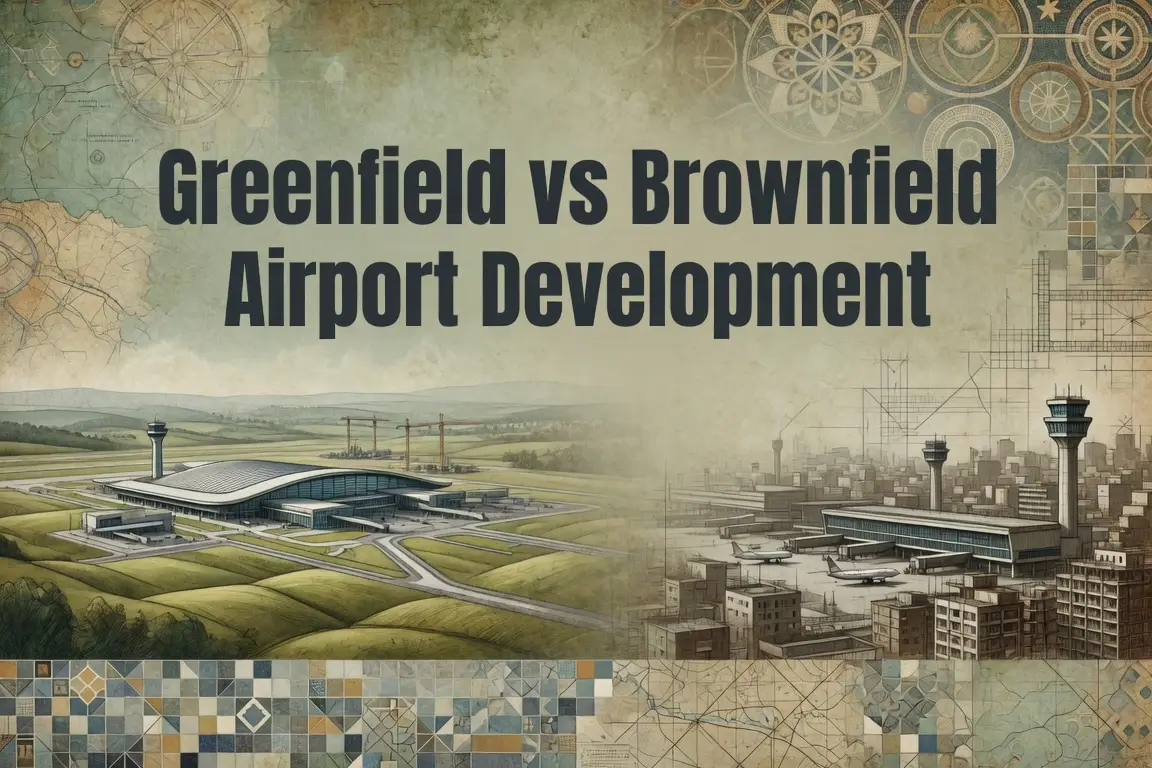
A greenfield airport is an entirely new airport built on undeveloped land where little or no aviation infrastructure previously existed.
Developers start with a blank canvas and can design the airport according to modern operational requirements and future growth expectations.
Examples of greenfield developments include:
- Istanbul Airport
- Beijing Daxing International Airport
Advantages of Greenfield Development
Greater Design Flexibility
Developers can optimize the entire airport layout, including:
- Runways
- Passenger terminals
- Cargo facilities
- Ground transportation
- Commercial developments
Better Long-Term Expansion Potential
Greenfield projects usually offer more land for future growth and additional infrastructure.
Modern Infrastructure
The airport can incorporate the latest technologies and sustainability solutions from the beginning.
Opportunity for Airport Cities
Large greenfield sites may allow for:
- Logistics parks
- Commercial districts
- Industrial zones
- Airport cities and aerotropolis developments
Challenges of Greenfield Development
High Initial Investment
Building an entirely new airport often requires substantial capital investment.
Longer Development Timelines
New airports require:
- Land acquisition
- Environmental approvals
- Infrastructure construction
- New transportation connections
Higher Development Risk
Forecasting future demand for a completely new airport can involve significant uncertainty.
What Is a Brownfield Airport Development?
Brownfield development involves expanding, upgrading, or redeveloping an existing airport.
Rather than starting from scratch, developers improve existing infrastructure to accommodate future demand.
Examples include:
- Expansion of Heathrow Airport
- Modernization of Singapore Changi Airport
- Redevelopment of LaGuardia Airport
Advantages of Brownfield Development
Existing Demand
Existing airports already have:
- Airlines
- Passengers
- Established markets
- Supporting infrastructure
This reduces commercial risk.
Lower Infrastructure Requirements
Roads, utilities, and transportation connections often already exist.
Faster Revenue Generation
Because the airport is already operational, investments may begin generating returns sooner.
Lower Market Uncertainty
Developers can make decisions based on existing traffic data and operational experience.
Challenges of Brownfield Development
Limited Land Availability
Many established airports face physical constraints that restrict expansion.
Operational Disruption
Construction often takes place while the airport remains operational, creating additional complexity.
Legacy Infrastructure
Older airports may have outdated facilities that limit modernization opportunities.
Higher Construction Complexity
Developers must carefully coordinate construction activities to avoid disrupting airport operations.
Comparing Greenfield and Brownfield Development
Investment Requirements
Greenfield projects usually require higher upfront investment.
Brownfield projects often require lower initial capital but may involve expensive redevelopment and operational constraints.
Flexibility
Greenfield developments offer significantly greater design freedom.
Brownfield projects must work within existing physical limitations.
Time to Market
Brownfield projects can often deliver additional capacity more quickly.
Greenfield developments usually require longer planning and construction periods.
Expansion Potential
Greenfield airports generally offer superior long-term growth opportunities.
Brownfield airports may eventually reach physical capacity limits.
When Is Greenfield Development the Better Choice?
Greenfield development may be preferable when:
- Existing airports have limited expansion potential.
- Long-term traffic growth is expected.
- Governments seek to create new economic zones.
- Large areas of suitable land are available.
- Developers want to create integrated airport cities.
When Is Brownfield Development the Better Choice?
Brownfield development may be preferable when:
- Existing infrastructure remains valuable.
- Additional capacity is needed quickly.
- Land availability is limited.
- Budget constraints are significant.
- Existing airports still have growth potential.
Hybrid Approaches
Some airport projects combine both strategies.
An existing airport may continue operating while a new airport is developed nearby, allowing traffic to gradually transition over time.
This approach can reduce operational risk while still providing long-term expansion opportunities.
Conclusion
Both greenfield and brownfield airport developments play important roles in global aviation infrastructure.
Greenfield projects offer flexibility, long-term growth potential, and the opportunity to build entirely new airport ecosystems. Brownfield projects provide lower commercial risk and allow developers to leverage existing infrastructure and demand.
The right approach depends on the specific objectives of the project, market conditions, and the long-term vision for the airport and the region it serves.