
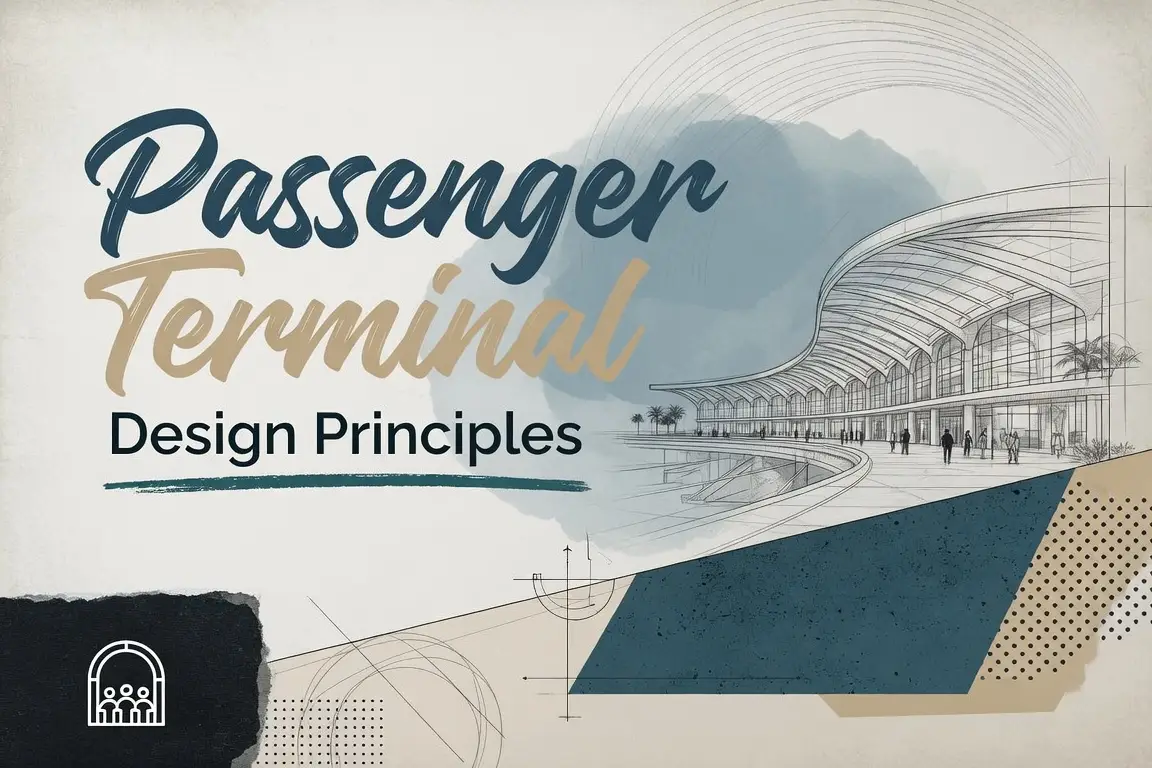
The Purpose of a Passenger Terminal
A passenger terminal performs several critical functions:
- Passenger processing
- Security screening
- Baggage handling
- Immigration and customs
- Commercial activities
- Passenger services
- Airline operations
The terminal acts as the central interface between passengers, airlines, and airport operators.
Designing for Passenger Flow
One of the most important principles of terminal design is ensuring smooth passenger movement.
Passengers typically move through several stages:
- Entrance to the terminal
- Check-in
- Security screening
- Immigration procedures
- Departure gates
- Arrival processing
- Baggage claim
- Exit from the airport
The design should minimize unnecessary walking distances, bottlenecks, and congestion.
Efficient passenger flow improves both operational performance and customer satisfaction.
Capacity Planning
Passenger terminals must be designed for both current and future demand.
Capacity planning considers:
- Annual passenger numbers
- Peak-hour traffic
- Airline schedules
- Seasonal fluctuations
- Future growth projections
Underestimating future demand can result in overcrowding and expensive expansions shortly after opening.
Overestimating demand can create unnecessary costs and underutilized infrastructure.
Flexibility and Expandability
A successful terminal should be able to adapt to changing market conditions.
Modern airport terminals are increasingly designed with:
- Modular construction
- Expandable gate areas
- Flexible passenger processing zones
- Convertible commercial spaces
A flexible design allows airports to respond to future growth without major disruptions.
Terminal Layout Concepts
Different airports use different terminal configurations depending on their size and operational requirements.
Common layouts include:
Linear Terminal
A straightforward design with gates arranged along a single building.
Pier Terminal
Passengers move through central concourses that extend toward aircraft stands.
Satellite Terminal
Aircraft gates are located in separate buildings connected to the main terminal.
Midfield Terminal
A terminal located between runways, often connected by automated transportation systems.
Each design has advantages and disadvantages depending on traffic levels and available land.
Passenger Experience
Passenger experience has become an increasingly important design consideration.
Modern terminals focus on:
- Natural lighting
- Comfortable waiting areas
- Clear wayfinding
- Reduced processing times
- Retail and dining options
- Accessibility for all travelers
An attractive and efficient terminal can significantly improve an airport’s reputation.
Technology Integration
Technology now plays a central role in terminal design.
Modern terminals increasingly incorporate:
- Self-service check-in
- Automated bag drops
- Biometric processing
- Digital wayfinding
- Smart security systems
- Real-time operational data
Technology can improve efficiency while reducing operating costs.
Commercial Opportunities
Passenger terminals are also important commercial assets.
Non-aeronautical revenues often come from:
- Retail stores
- Restaurants
- Duty-free shopping
- Lounges
- Advertising
- Car parking
A successful terminal design balances operational efficiency with commercial opportunities.
Sustainability Considerations
Environmental sustainability has become a major factor in terminal design.
Many airports now incorporate:
- Energy-efficient systems
- Solar power
- Natural ventilation
- Water recycling
- Sustainable materials
- Green building certifications
Sustainable terminals can reduce operating costs while supporting environmental objectives.
Security and Safety
Airport terminals must provide high levels of security without compromising passenger experience.
Design considerations include:
- Security screening areas
- Controlled access points
- Emergency evacuation routes
- Fire safety systems
- Surveillance systems
Security requirements must be integrated into the design from the earliest planning stages.
Designing for the Future
The aviation industry continues to evolve rapidly.
Passenger terminals must be capable of adapting to:
- New technologies
- Changing passenger expectations
- Airline business models
- Growth in passenger traffic
- Future regulatory requirements
The most successful terminals are designed not only for today’s needs but also for tomorrow’s challenges.
Conclusion
Passenger terminal design is a complex balance between operational efficiency, passenger experience, commercial performance, and future growth.
A well-designed terminal can become one of an airport’s most valuable assets, supporting both aviation operations and long-term economic development.
As airports continue to evolve, flexibility, technology, and sustainability will increasingly shape the passenger terminals of the future.