
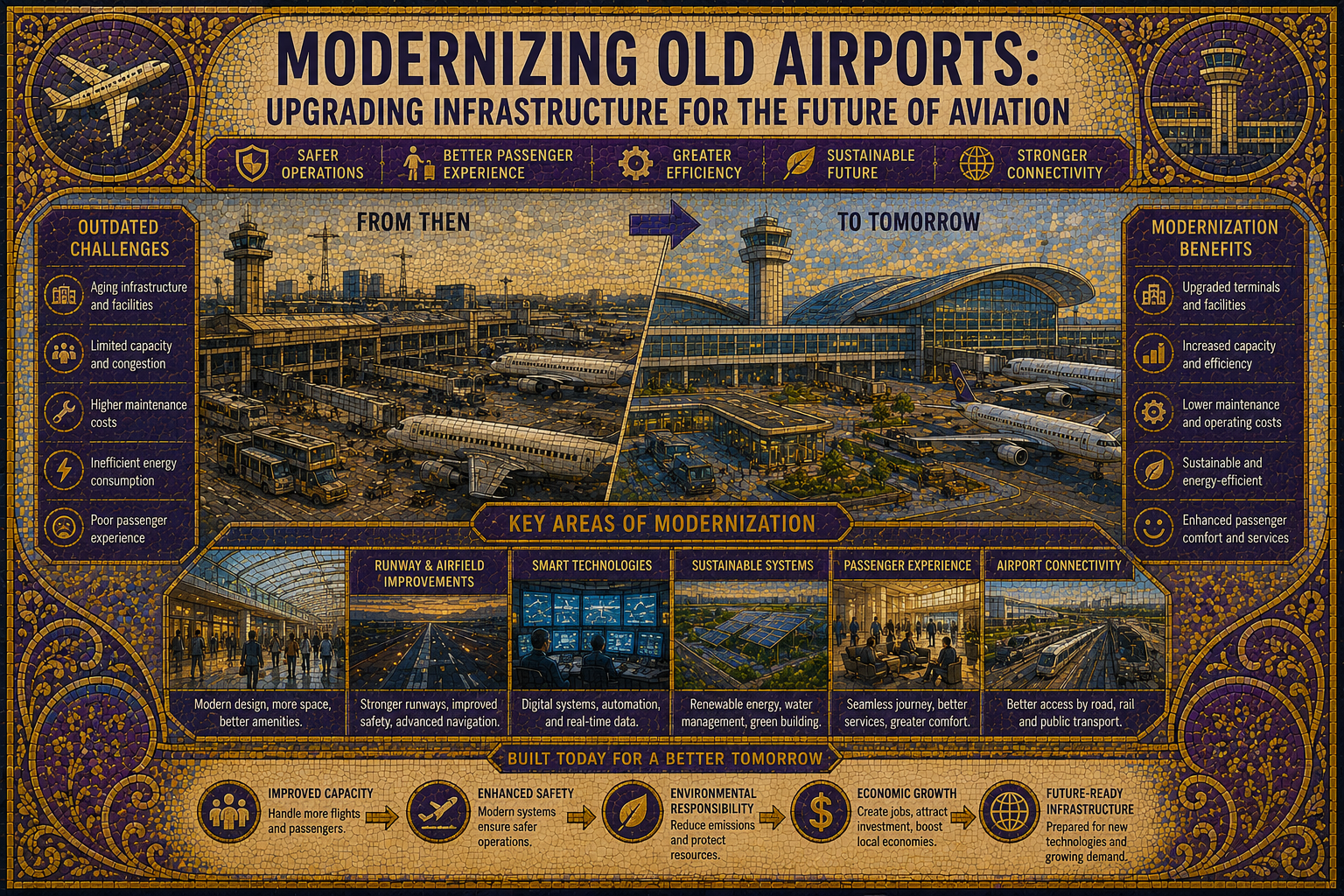
Why Airports Need Modernization
Many older airports face growing pressure due to:
- Increasing passenger demand
- Aging infrastructure
- New security requirements
- Changing airline expectations
- Technological advancements
- Sustainability objectives
- Competition from newer airports
Infrastructure that performed well twenty or thirty years ago may no longer meet modern operational requirements.
Modernization projects help airports remain competitive and continue supporting regional economic development.
The Challenges of Aging Infrastructure
Older airports often face several common problems.
These may include:
- Congested terminals
- Outdated baggage systems
- Limited gate capacity
- Inefficient passenger flows
- Aging utility systems
- Insufficient parking facilities
- Deteriorating runways and taxiways
In some cases, maintenance costs increase significantly as infrastructure ages, making modernization financially attractive.
Improving Passenger Experience
Passenger expectations have changed considerably over the past several decades.
Modern travelers increasingly expect:
- Faster processing times
- Better digital services
- More comfortable terminals
- Improved retail and dining options
- Reliable connectivity
- Efficient transportation links
Modernization projects often focus heavily on improving customer experience and creating more attractive airport environments.
Terminal Upgrades
Many airport modernization programs begin with terminal improvements.
Projects may include:
- Terminal renovations
- New gate areas
- Expanded security screening
- Additional passenger amenities
- Improved accessibility
- Larger waiting areas
In some cases, terminals undergo complete redesigns while retaining portions of the original structure.
Modern terminal layouts can significantly improve both operational efficiency and passenger satisfaction.
Upgrading Airfield Infrastructure
Many older airports require improvements to:
- Runways
- Taxiways
- Aprons
- Airfield lighting systems
- Navigation equipment
Airfield modernization projects can improve:
- Safety
- Capacity
- Operational reliability
- Aircraft compatibility
These improvements may also allow airports to accommodate newer and larger aircraft.
Replacing Aging Utility Systems
Utilities are often among the oldest components of airport infrastructure.
Modernization projects frequently include upgrades to:
- Electrical systems
- Water infrastructure
- Fuel systems
- Telecommunications networks
- Heating and cooling systems
- Data infrastructure
Reliable utility systems are essential to supporting modern airport operations and future expansion.
Technology Modernization
Technology has transformed the aviation industry.
Many older airports were not designed for:
- Self-service check-in
- Automated baggage handling
- Biometric systems
- Digital wayfinding
- Advanced security technologies
- Smart building systems
Technology upgrades can significantly improve operational efficiency without requiring major physical expansion.
Sustainability Improvements
Environmental performance has become an increasingly important aspect of airport modernization.
Projects often include:
- Energy-efficient buildings
- Renewable energy systems
- LED lighting
- Water conservation measures
- Sustainable construction materials
- Electric vehicle infrastructure
Modernization provides an opportunity to reduce environmental impacts while lowering long-term operating costs.
Enhancing Security Infrastructure
Security requirements have changed dramatically over recent decades.
Older airports frequently require upgrades to:
- Passenger screening facilities
- Access control systems
- Surveillance technologies
- Cybersecurity infrastructure
- Emergency response capabilities
Security improvements must often be integrated into existing facilities without disrupting operations.
Improving Accessibility and Connectivity
Many older airports require better integration with surrounding transportation networks.
Modernization projects may include:
- Road improvements
- Rail connections
- Public transportation upgrades
- Additional parking facilities
- New drop-off areas
Improving accessibility can significantly enhance the overall performance and competitiveness of an airport.
Increasing Capacity Without Building a New Airport
One of the primary goals of modernization is increasing capacity.
This can often be achieved through:
- Better terminal layouts
- Improved operational processes
- Technology upgrades
- More efficient infrastructure utilization
Modernization projects frequently allow airports to accommodate significantly higher traffic volumes without requiring entirely new facilities.
Maintaining Operations During Modernization
Unlike greenfield airport developments, modernization projects usually occur while the airport remains operational.
This creates significant challenges, including:
- Passenger safety
- Construction logistics
- Temporary facilities
- Noise management
- Operational coordination
Careful planning and phased construction approaches are essential to minimizing disruptions.
Preserving Historical and Architectural Value
Some older airports possess significant architectural or cultural value.
Modernization projects may therefore seek to preserve:
- Historic terminal buildings
- Architectural features
- Cultural heritage elements
Balancing preservation with modernization can create unique and attractive airport environments.
Financing Airport Modernization
Modernization projects can require substantial investment.
Funding may come from:
- Airport revenues
- Government support
- Infrastructure funds
- Private investors
- Public-private partnerships
The financial justification for modernization often depends on:
- Increased capacity
- Improved efficiency
- Higher commercial revenues
- Reduced maintenance costs
Building for Future Growth
Successful modernization projects look beyond immediate requirements.
Developers should consider:
- Future passenger demand
- New technologies
- Additional expansion opportunities
- Sustainability objectives
- Long-term operational flexibility
Future-proofing infrastructure helps avoid repeated major investments and improves long-term competitiveness.
The Strategic Importance of Modernization
Modernizing older airports is often more than an infrastructure project.
It can:
- Strengthen regional economies
- Improve national connectivity
- Attract new airlines
- Increase tourism
- Support trade and investment
Well-executed modernization programs can transform aging airports into competitive, efficient, and sustainable transportation hubs.
Conclusion
Many airports around the world face the challenge of operating with aging infrastructure that no longer meets the demands of modern aviation. Modernization offers an opportunity to improve efficiency, increase capacity, enhance passenger experience, and support long-term economic growth.
While upgrading an operational airport presents significant technical and financial challenges, it often provides a practical and cost-effective alternative to building entirely new facilities.
For airport developers, operators, and governments, modernization is not simply about replacing old infrastructure. It is about preparing airports for the future and ensuring that they remain valuable assets for decades to come.