
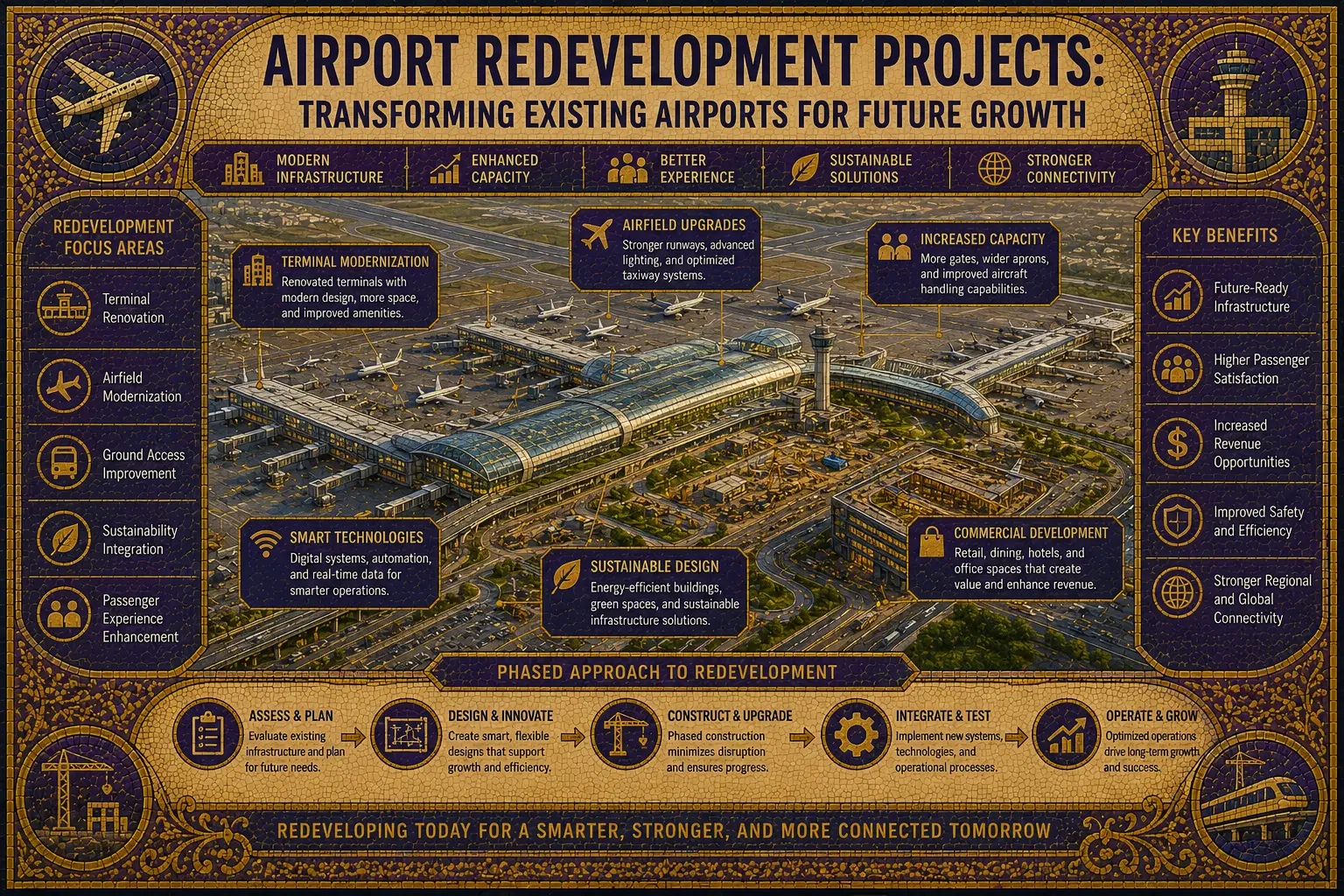
What Is Airport Redevelopment?
Airport redevelopment refers to the process of substantially upgrading, reconfiguring, or repurposing existing airport infrastructure.
Redevelopment projects may include:
- Terminal reconstruction
- Runway rehabilitation
- Cargo facility upgrades
- Airfield reconfiguration
- Utility modernization
- Transportation improvements
- Commercial developments
- Technology upgrades
In some cases, redevelopment projects completely transform the role and functionality of an airport.
Why Airports Need Redevelopment
Several factors may drive redevelopment initiatives.
These include:
- Aging infrastructure
- Capacity limitations
- Changing passenger expectations
- New security requirements
- Technological advancements
- Sustainability objectives
- Airline network changes
- Economic development opportunities
Many airports operating today were built decades ago and were not designed for modern aviation demands.
Redevelopment helps ensure that these facilities remain competitive and economically viable.
Extending the Life of Existing Infrastructure
Building a completely new airport is often extremely expensive and politically challenging.
Redevelopment can offer a practical alternative by:
- Improving existing assets
- Reducing capital requirements
- Preserving strategic locations
- Maintaining regional connectivity
- Accelerating project delivery
In many cases, redevelopment allows airports to achieve significant improvements at a lower cost than developing entirely new facilities.
Terminal Redevelopment
Passenger terminals are frequently the focus of redevelopment projects.
Terminal improvements may include:
- Building renovations
- Additional gate areas
- Modernized passenger facilities
- Improved circulation spaces
- Expanded retail areas
- Upgraded baggage systems
Redeveloped terminals can significantly improve operational efficiency and passenger experience.
Airfield Redevelopment
Airfield infrastructure also requires periodic modernization.
Projects may involve:
- Runway reconstruction
- Taxiway modifications
- Apron expansion
- Airfield lighting upgrades
- Navigation system improvements
These investments help improve safety, reliability, and operational performance.
Redevelopment can also allow airports to accommodate larger and more modern aircraft.
Cargo and Logistics Redevelopment
The growth of global trade and e-commerce has increased demand for modern cargo facilities.
Airport redevelopment projects increasingly include:
- New cargo terminals
- Cold chain infrastructure
- Logistics parks
- Distribution facilities
- Truck access improvements
For many airports, cargo redevelopment creates significant opportunities for economic growth and diversification.
Reconfiguring Airport Layouts
Some airports face operational constraints because their original layouts no longer support efficient operations.
Redevelopment may involve:
- Relocating terminals
- Reconfiguring aircraft stands
- Improving road access
- Creating additional development areas
- Enhancing passenger flows
Reconfiguring infrastructure can significantly improve airport performance without requiring a completely new airport.
Integrating New Technologies
Technology has transformed airport operations in recent decades.
Redevelopment projects often incorporate:
- Self-service technologies
- Automated baggage handling
- Biometric systems
- Smart building systems
- Digital infrastructure
- Advanced security technologies
Technology integration helps airports improve efficiency while enhancing the passenger experience.
Sustainability and Environmental Improvements
Modern redevelopment projects increasingly prioritize sustainability.
Typical initiatives include:
- Energy-efficient buildings
- Renewable energy systems
- Water conservation measures
- Carbon reduction strategies
- Sustainable construction materials
Redevelopment provides an opportunity to improve environmental performance while reducing long-term operating costs.
Commercial Redevelopment Opportunities
Modern airports are increasingly viewed as commercial ecosystems.
Redevelopment projects may include:
- Hotels
- Office developments
- Retail complexes
- Business parks
- Logistics centers
- Airport cities
These developments can generate significant non-aeronautical revenues and strengthen the airport’s economic role.
Redevelopment While Maintaining Operations
One of the biggest challenges in airport redevelopment is maintaining airport operations during construction.
Developers must carefully manage:
- Passenger safety
- Aircraft movements
- Construction logistics
- Temporary facilities
- Noise and disruption
Phased construction strategies are often necessary to ensure operational continuity.
Maintaining uninterrupted operations can significantly increase project complexity.
Financing Redevelopment Projects
Airport redevelopment projects require substantial investment.
Funding sources may include:
- Airport revenues
- Government support
- Infrastructure funds
- Private investment
- Public-private partnerships
The business case for redevelopment often depends on:
- Increased capacity
- Improved efficiency
- Additional revenues
- Lower operating costs
- Enhanced competitiveness
Careful financial planning is essential for long-term project success.
Stakeholder Coordination
Redevelopment projects involve numerous stakeholders, including:
- Airport operators
- Airlines
- Government agencies
- Investors
- Contractors
- Local communities
- Utility providers
Each stakeholder has different priorities and operational requirements.
Strong communication and governance are critical to successful project delivery.
Planning for Future Growth
Successful redevelopment projects focus not only on current needs but also on future opportunities.
Long-term planning may include:
- Additional terminal capacity
- Future runway development
- Cargo expansion zones
- Commercial development areas
- Technology upgrades
Redevelopment should create infrastructure that remains adaptable and competitive for decades.
The Economic Importance of Airport Redevelopment
Airport redevelopment projects often generate benefits that extend far beyond the airport itself.
They can:
- Support employment
- Increase tourism
- Improve trade connectivity
- Attract investment
- Stimulate regional development
Modernized airports frequently become catalysts for broader economic transformation.
Lessons from Successful Redevelopment Projects
Experience from major redevelopment projects around the world highlights several important principles:
- Plan for long-term growth.
- Maintain operational flexibility.
- Prioritize stakeholder engagement.
- Integrate modern technologies.
- Incorporate sustainability objectives.
- Protect future expansion opportunities.
- Maintain strong project governance.
These principles significantly improve the likelihood of successful redevelopment.
Conclusion
Airport redevelopment projects play a critical role in ensuring that existing airports remain efficient, competitive, and capable of meeting future aviation demands. Rather than replacing existing infrastructure entirely, redevelopment allows airports to modernize, expand, and adapt to changing market conditions.
Although redevelopment projects are highly complex and often occur under challenging operational conditions, they can deliver significant economic, operational, and environmental benefits.
For airport developers, governments, and investors, redevelopment is not simply about upgrading old infrastructure. It is about transforming airports into future-ready assets capable of supporting regional growth and global connectivity for decades to come.