
What Is a Cargo Terminal?
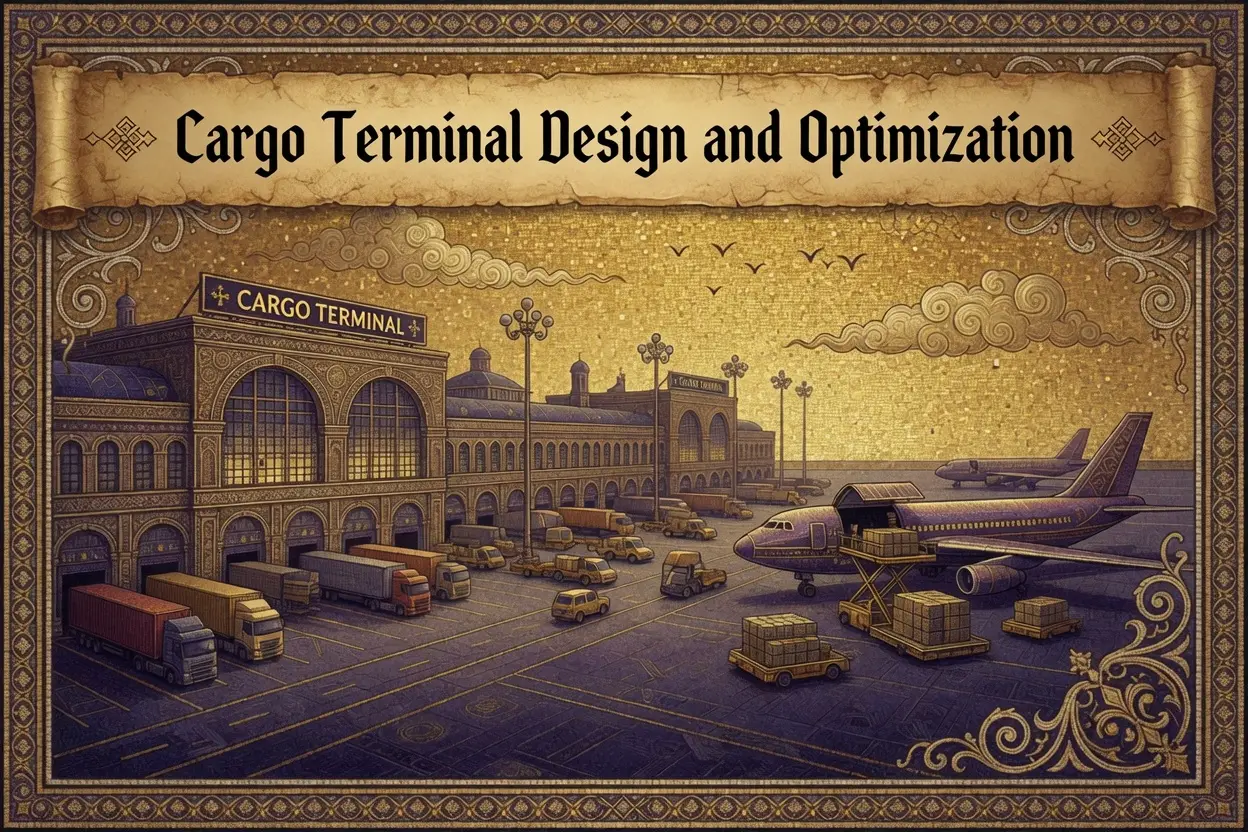
A cargo terminal is a specialized facility where air freight is received, processed, stored, and transferred between aircraft and ground transportation.
Typical cargo terminal activities include:
- Cargo acceptance
- Security screening
- Customs processing
- Build-up and break-down operations
- Storage and warehousing
- Truck handling
- Documentation processing
The terminal acts as the interface between air transportation and the broader logistics network.
Why Cargo Terminal Design Matters
Cargo operations differ significantly from passenger operations.
Cargo terminals must handle:
- Large shipment volumes
- High-value goods
- Time-sensitive products
- Special cargo requirements
- Complex logistics processes
An efficient terminal design can:
- Reduce handling times
- Increase throughput
- Improve safety
- Lower operating costs
- Enhance customer service
- Support future expansion
Understanding Cargo Demand
Before designing a cargo terminal, planners must understand future demand.
Important considerations include:
- Annual cargo volumes
- Peak cargo periods
- Type of cargo handled
- Airline requirements
- Future market growth
- E-commerce demand
Accurate forecasting helps determine the appropriate size and layout of the facility.
The Importance of Terminal Layout
The layout of a cargo terminal has a direct impact on operational efficiency.
A well-designed facility should minimize:
- Internal travel distances
- Cargo handling steps
- Vehicle congestion
- Processing delays
The objective is to move cargo through the terminal as efficiently as possible.
Functional Areas of a Cargo Terminal
Most cargo terminals include several key operational areas.
Cargo Acceptance Area
Shipments are received and processed before entering the terminal.
Warehousing Area
Cargo is temporarily stored before export or collection.
Build-Up and Break-Down Areas
Cargo is consolidated into aircraft loading units or separated after arrival.
Customs and Inspection Facilities
Certain shipments require customs clearance or security inspections.
Truck Docks
Truck operations must be designed to accommodate efficient cargo transfers.
Office Space
Airlines, freight forwarders, customs authorities, and logistics companies often require office facilities within the terminal.
Designing for Different Cargo Types
Different products require different handling solutions.
General Cargo
Standard freight that does not require special handling.
Pharmaceutical Cargo
Requires strict temperature control and monitoring systems.
Perishable Goods
Includes products such as flowers, fruits, and seafood that require cold chain facilities.
E-Commerce Cargo
Requires high-speed sorting and processing capabilities.
Dangerous Goods
Requires specialized handling procedures and storage areas.
Understanding cargo composition is essential when designing terminal infrastructure.
Technology and Automation
Modern cargo terminals increasingly rely on technology to improve efficiency.
Examples include:
- Automated storage systems
- Cargo tracking technology
- Warehouse management systems
- Digital documentation
- Automated screening systems
- Real-time operational monitoring
Technology can significantly improve productivity and reduce operating costs.
Capacity Planning
Cargo terminals should be designed with future growth in mind.
Capacity planning considers:
- Current cargo volumes
- Future growth forecasts
- Peak periods
- Expansion requirements
Terminals that lack expansion opportunities may quickly become operational bottlenecks.
Landside Connectivity
Cargo terminals depend heavily on efficient ground transportation.
Important considerations include:
- Highway access
- Truck parking
- Internal road systems
- Intermodal connections
- Future logistics developments
Poor landside access can significantly reduce terminal efficiency.
Sustainability Considerations
Sustainability is becoming increasingly important in cargo infrastructure development.
Modern terminals often incorporate:
- Energy-efficient systems
- Solar energy
- Water management solutions
- Sustainable building materials
- Electric vehicle infrastructure
Sustainable design can reduce operating costs while supporting environmental objectives.
Flexibility and Future Expansion
The air cargo industry changes rapidly.
Cargo terminals should be designed to accommodate:
- New technologies
- Changes in cargo composition
- Growth in e-commerce
- New logistics requirements
- Future automation
Flexibility is one of the most important principles of long-term cargo infrastructure planning.
The Role of Cargo Terminals in Airport Development
For many airports, cargo operations represent a major source of economic activity.
A well-designed cargo terminal can:
- Attract airlines
- Support regional industries
- Encourage foreign investment
- Create jobs
- Stimulate logistics development
In some cases, cargo infrastructure can become the primary driver of airport growth.
Conclusion
Cargo terminal design is far more than constructing a warehouse next to an airport.
Successful cargo facilities require a deep understanding of logistics, operational efficiency, future demand, and long-term development strategies.
As global trade and e-commerce continue to grow, efficient and flexible cargo terminals will become increasingly important components of modern airport infrastructure.