
What Is an Environmental Impact Assessment?
An Environmental Impact Assessment (EIA) is a formal process used to identify, evaluate, and manage the environmental consequences of a proposed project.
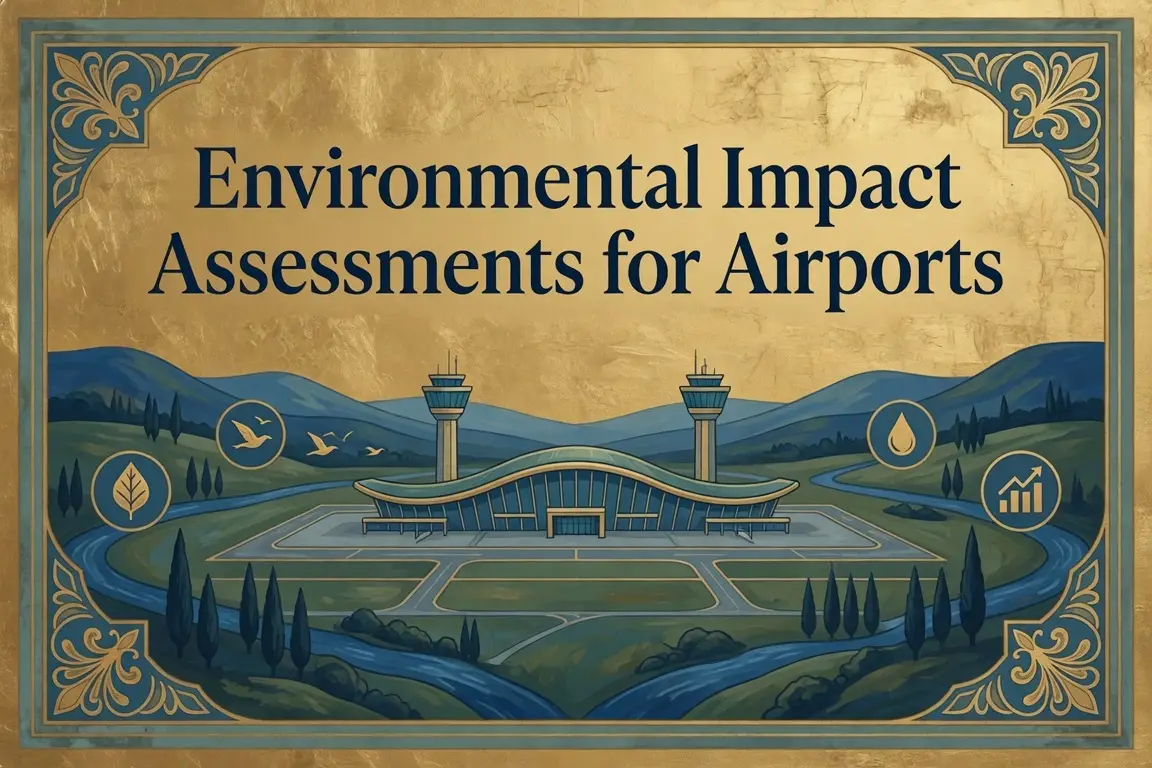
For airports, the assessment examines how development may affect:
- Air quality
- Noise levels
- Water resources
- Wildlife and habitats
- Local communities
- Land use
- Climate and emissions
The purpose of the assessment is not necessarily to stop development but to help decision-makers understand potential impacts and implement appropriate mitigation measures.
Why Environmental Assessments Are Important
Environmental assessments play a critical role in airport planning because they:
- Support informed decision-making
- Improve project design
- Reduce environmental risks
- Increase transparency
- Address community concerns
- Help secure regulatory approvals
- Promote sustainable development
Without a thorough assessment, airport projects may face significant delays, legal challenges, or even cancellation.
Air Quality Impacts
Airport activities can contribute to air pollution through:
- Aircraft operations
- Ground vehicles
- Construction activities
- Power generation systems
- Road traffic
Environmental assessments examine potential impacts on local air quality and identify measures to reduce emissions.
These measures may include cleaner technologies, improved transportation systems, and operational efficiencies.
Aircraft Noise
Noise is often one of the most sensitive issues in airport development.
Environmental studies typically evaluate:
- Flight paths
- Noise contours
- Population exposure
- Future traffic growth
- Mitigation strategies
Noise management measures may include operational procedures, land-use planning, and sound insulation programs.
Wildlife and Biodiversity
Airport development can affect local ecosystems and natural habitats.
Environmental assessments consider:
- Protected species
- Wetlands
- Forests
- Migration routes
- Biodiversity impacts
Wildlife studies are particularly important because certain bird populations may also create operational safety risks for aircraft.
Water Resources
Airports can influence both surface water and groundwater systems.
Environmental studies examine:
- Drainage systems
- Flood risks
- Water consumption
- Water quality
- Stormwater management
Proper water management helps reduce environmental impacts and improve long-term resilience.
Climate Change and Carbon Emissions
The aviation industry faces increasing pressure to reduce its environmental footprint.
Modern environmental assessments increasingly examine:
- Greenhouse gas emissions
- Energy consumption
- Climate resilience
- Sustainable infrastructure opportunities
Many airports now incorporate sustainability initiatives into their long-term development strategies.
Social and Community Impacts
Airport projects can have significant effects on surrounding communities.
Assessments often evaluate:
- Land acquisition requirements
- Relocation issues
- Employment impacts
- Traffic congestion
- Visual impacts
- Public health considerations
Early engagement with local communities can help identify concerns and improve project acceptance.
The Environmental Assessment Process
Although requirements vary by country, environmental assessments generally follow several stages.
Screening
Authorities determine whether a formal assessment is required.
Scoping
The key environmental issues and study areas are identified.
Data Collection and Analysis
Specialists conduct environmental studies and gather baseline information.
Impact Assessment
Potential environmental effects are evaluated.
Mitigation Planning
Measures are developed to reduce or manage negative impacts.
Public Consultation
Stakeholders and communities are given an opportunity to provide feedback.
Decision-Making
Regulators determine whether the project can proceed and under what conditions.
Environmental Mitigation Measures
Modern airport projects often include measures such as:
- Noise management programs
- Habitat restoration
- Energy-efficient buildings
- Renewable energy systems
- Water recycling initiatives
- Sustainable transport connections
The objective is to minimize environmental impacts while supporting long-term airport development.
Environmental Assessments and Project Risk
Environmental issues can significantly affect project timelines and costs.
Insufficient environmental planning can lead to:
- Regulatory delays
- Legal disputes
- Increased project costs
- Community opposition
- Reputational damage
For this reason, environmental assessments should be integrated into the early stages of airport planning.
Conclusion
Environmental impact assessments have become an essential component of modern airport development.
By identifying potential risks early and implementing effective mitigation measures, airports can balance economic growth with environmental responsibility.
A well-executed environmental assessment not only supports regulatory compliance but also contributes to the long-term sustainability and success of an airport project.